


Weber Medical
WeberBrain® - Home
WeberBrain® - Home
Couldn't load pickup availability
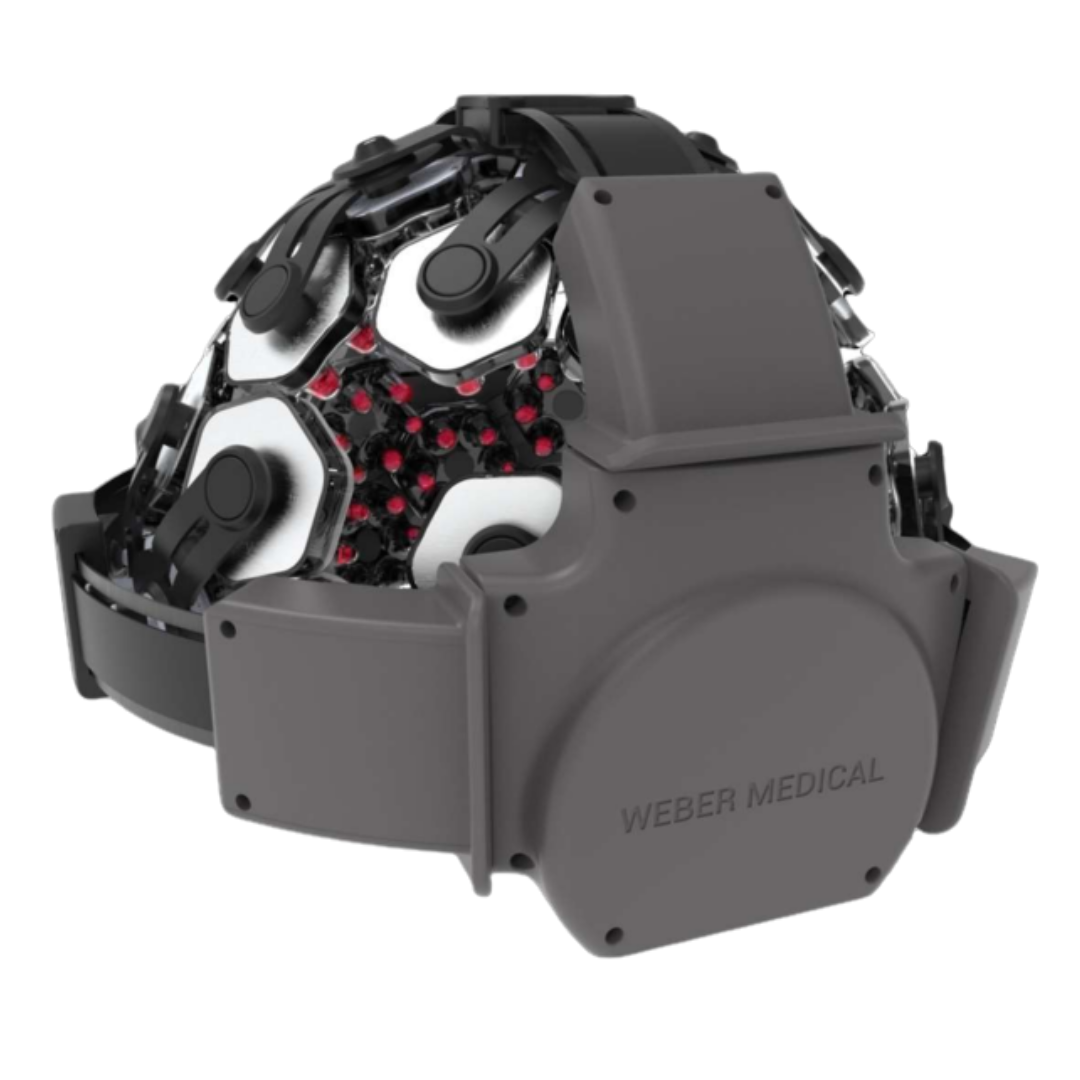
WeberBrain® Home brings next-generation light technology into the comfort of your own home. Designed by Weber Medical, this innovative wearable helmet uses real laser light technology to deliver structured light across the head as part of a simple and relaxing wellness routine.
Unlike many home devices that rely on basic LED lights, WeberBrain® uses multiple wavelengths of red and infrared laser light combined with a specialized lens system. This design helps distribute light more evenly across the scalp while adapting comfortably to different head shapes and sizes.
The result is a thoughtfully engineered system created to support everyday brain wellness, relaxation, and mental balance—right from home.
Best For
Best For
The home device for anyone focused on the head and scalp who wants real laser light rather than LEDs. 228 laser diodes across three wavelengths, with light fingers that reach the scalp through hair.
What It Does
What It Does
How This Device Supports You
How This Device Supports You
How The Light Works
How The Light Works
Who This Is For
Who This Is For
What's Included
What's Included
How To Use It
How To Use It
Safety and Technical Details
Safety and Technical Details
Disclaimer
Disclaimer
This device is a general wellness device and is not intended to diagnose, treat, cure, or prevent any disease or medical condition. The information provided is for educational purposes only. Always consult a qualified healthcare professional before beginning any new wellness routine. Individual experiences may vary.


What is the WeberBrain® System?
The WeberBrain® system is a non-invasive, light-based technology designed to support brain function through transcranial photobiomodulation (PBM).
By delivering specific wavelengths of light to targeted areas of the head, the system is designed to support cellular activity, circulation, and overall neurological balance.
This approach is used in both home and professional settings as part of a broader wellness or clinical support routine.

How Transcranial Photobiomodulation Works
Transcranial photobiomodulation (PBM) uses specific wavelengths of light to interact with the body at a cellular level. Each wavelength penetrates to different depths and may support key biological processes, including energy production and circulation.
- Red Light (630–660 nm): Supports surface-level tissue and circulation
- Near Infrared (810–880 nm): Reaches deeper layers and may support cellular energy production
- Infrared (1064 nm, if applicable): Designed for deeper penetration and broader coverage
Together, these wavelengths work to support the body’s natural processes in a non-invasive way.
WeberBrain® Systems Comparison
Each WeberBrain® system is built on the same core light-based technology, designed to support brain function through transcranial photobiomodulation. While the foundation is consistent across all models, each option is tailored to a different level of use, environment, and desired control.
From simple, entry-level support to more advanced and customizable applications, the differences come down to how you plan to incorporate the system into your routine. Whether you are looking for a straightforward at-home experience or a more flexible solution for professional use, each system is designed to support you in a clear and structured way.
The comparison below outlines the key distinctions between each model to help you determine which option best aligns with your needs.


| Feature | Infrared Helmet | WeberBrain® Home | WeberBrain® Pro |
|---|---|---|---|
| Primary Use | Foundational light-based brain support | Personal, at-home brain wellness support | Professional or advanced use |
| Best For | Users looking for a simple entry-level option | Individuals wanting consistent home use | Practitioners, clinics, or advanced users seeking more control |
| Technology | Infrared light technology | Transcranial photobiomodulation with targeted light application | Advanced transcranial photobiomodulation with expanded flexibility |
| User Experience | Simple and straightforward | Easy-to-use and designed for regular home sessions | More customizable and designed for tailored application |
| Control Level | Basic | Guided / simplified | Advanced control options |
| Output Level | Standard | Moderate | Higher output |
| Environment | Home or wellness setting | Home setting | Clinic, professional, or advanced home setting |
| Ideal Goal | General brain wellness support | Consistent, easy-to-follow brain support routine | More flexible application for professional or advanced protocols |
Understanding the Technology Behind Each System
While each WeberBrain® system is built on the same foundation of light-based support, the internal design and delivery of that light differs between models. These differences impact how light is distributed, how wavelengths are delivered, and the level of precision available during each session.


Choosing the Right WeberBrain® System
Selecting the right WeberBrain® system comes down to how you plan to use it, your preferred level of control, and the environment in which it will be used. While each option is built on the same core technology, the experience and flexibility vary depending on the model. The goal is not to choose the most advanced system—but the one that best aligns with your routine and needs.
-
Infrared Helmet may be a fit if:
- You are looking for a simple, entry-level option
- You prefer a straightforward, easy-to-use system
- You want foundational light-based support without added complexity
-
WeberBrain® Home may be a fit if:
- You want a consistent, at-home routine
- You prefer guided or simplified operation
- You are looking for a balance of ease and effectiveness
-
WeberBrain® Pro may be a fit if:
- You want more control over settings and application
- You are using it in a professional or clinical setting
- You are looking for greater flexibility in how sessions are delivered
What a Typical Session May Look Like
Using the WeberBrain® system is designed to be simple and repeatable, making it easy to incorporate into a regular routine. While specific settings may vary by model, the overall process remains consistent.

1. Position the Helmet
Place the helmet comfortably on the head, ensuring proper alignment for even light distribution.
2. Select Your Settings
Choose your desired settings or use the guided defaults, depending on the system you are using.
3. Begin Your Session
Allow the system to run for the designated session time, delivering light-based support in a controlled and consistent way.
4. Repeat as Part of Your Routine
Many users incorporate sessions regularly to support ongoing balance and function over time.
With a straightforward setup and consistent process, the WeberBrain® system is designed to support long-term use without unnecessary complexity.
Frequently Asked Questions
Is the Weberneedle® Endolaser safe?
The system is engineered with built-in safety controls, preset parameters, and high-quality fiber-optic components designed for predictable, controlled light delivery. It is FDA-cleared for specific applications and CE-certified in Europe. As with any device, users should follow all training, protocols, and instructions for safe operation.
How long does a typical session take?
Session length depends on the practitioner’s protocol and can vary widely. Most practitioners customize session duration based on the wavelength(s) used, the application area, and the goals of the visit.
How many sessions do patients typically need?
There is no standard or “typical” number. Frequency is determined entirely by the practitioner’s evaluation, the practice’s preferred protocols, and the individual’s wellness plan. The device simply provides a customizable platform that supports a wide range of approaches.
Can the Endolaser replace other services we offer?
The Endolaser is usually added as a complementary tool rather than a replacement. Many practices use it to expand their service menu, support personalized wellness programs, or offer new modalities alongside what they already provide.
What kind of training is required?
Training is provided through Weber Medical and authorized trainers. Most clinics complete an onboarding session covering system operation, safety, fiber-optic handling, wavelength selection, and clinical workflow integration. Additional advanced education is available for practices wanting deeper expertise.
Is this covered by insurance?
Coverage varies widely and depends on the practitioner’s credentials, visit coding, and the nature of the appointment. Many practices offer the Endolaser as a cash-based wellness service. Your billing department can determine how it fits into your existing structure.
Can I use it with other biohacking or wellness tools?
Many clinics combine the Endolaser with other wellness-focused technologies as part of broader protocols. How it is integrated is determined by the practitioner and the scope of their practice.
What's the ROI for adding this system?
Practices appreciate that the system allows for new service options without consumable-heavy overhead. ROI depends on pricing, client volume, and how the device is incorporated into existing or new programs. We provide ROI guidance and examples during your consultation.
Can I upgrade the system later?
Yes. The modular design allows you to add wavelengths, applicators, and accessories at any time. Clinics often start with a core configuration and expand as their service offerings grow.
What wavelengths should I choose for my practice?
Wavelength selection depends on your specialty, applications, and goals. Each wavelength offers different properties—from UV and blue to green, yellow, red, and infrared. We can help you determine the best combination based on your workflow and areas of focus.
How does this compare to other laser systems?
The Endolaser is unique in its fiber-optic delivery design and ability to use multiple wavelengths through minimally invasive or surface-based applicators. Its modular build, precision, and wavelength range set it apart from conventional external laser systems. Your consultation can help you understand whether its capabilities align with your practice’s needs.

About Weber Medical
Two Decades of Innovation in Light-Based Technology
Dr. Hans Michael Weber introduced the first minimally-invasive, low-level laser system in 2005 after recognizing limitations in the light-based devices available at the time. Drawing from his experience as a general practitioner, he began developing new ways to deliver light with higher precision and greater control. His work ultimately led to the creation of the patented Weberneedle® technology.
Today, Weber Medical systems are used in more than 2,000 clinics across 40+ countries. Dr. Weber continues to innovate from his clinic in Lauenförde, Germany, where he focuses on advancing research, improving device design, and expanding the possibilities of photonic applications for professional use.
Ready to Bring Advanced Light-Based Technology Into Your Clinic?
Get in touch to explore the Weberneedle® Endolaser System and learn how this platform can integrate into your professional environment. We’ll provide detailed information on system options, configurations, and available support so you can determine the best fit for your practice.